-01.avif)

Breaking the Cycle: A Master Arborist’s Guide to Conquering Peach Leaf Curl and Orchard Pests


If you have ever attempted to grow stone fruit in the upper Midwest or Great Lakes region, you already know the sinking feeling. You step out into your orchard or backyard in late spring, expecting a lush, vibrant green canopy, only to find the leaves puckered, blistered, and stained an angry, unnatural reddish-yellow.

Within weeks, those leaves turn brown, wither, and drop prematurely, carpeting the ground in fungal debris.
You are looking at Peach Leaf Curl, caused by the persistent fungal pathogen Taphrina deformans. It is widely considered one of the single greatest healthcare challenges for peach tree owners. Left unchecked, it doesn't just ruin your aesthetic; it fundamentally drains the tree's energy reserves, stunts its growth, and can ultimately lead to total decline and tree removal.
But here is the hard truth that trips up almost every homeowner: once you see the symptoms in May or June, it is already too late to spray.
Conquering this disease requires shifting away from reactionary "crisis management" and moving into a strict, proactive Integrated Pest Management (IPM) strategy. Here is the unvarnished, expert breakdown of how to build an impenetrable defense around your peach trees.
The Cultivar Ledger: Selecting Your Battleground
The most elegant layer of an IPM strategy starts before a single root hits the dirt: genetic resistance. Not all peach trees face this fungus with the same defenses. When planning your landscape, you must weigh the exact trade-offs between disease resistance, flavor profiles, and seasonal performance.
1. Frost Peach (The Resistant Standard)
The Advantage: This is the gold standard for Peach Leaf Curl resistance. While it can still get minor infections under extreme, prolonged wet conditions, its internal immune system naturally repels Taphrina deformans better than almost any other commercial variety. It is exceptionally hardy and reliable.
The Disadvantage: The fruit quality, while excellent for canning, processing, and fresh eating, is generally smaller and lacks the intense, prize-winning dessert sweetness found in more susceptible classic varieties.
2. Redhaven (The Backyard Favorite)
The Advantage: This is an incredibly robust, widely planted variety that features excellent cold hardiness and a fantastic, heavy yield of world-class, sweet freestone fruit. It displays outstanding natural resistance to many common orchard issues, including Gummosis (the destructive oozing of bacterial cankers).
The Disadvantage: It possesses zero natural resistance to Peach Leaf Curl. If left untreated during a damp spring, a Redhaven canopy will easily disintegrate into a blistered, puckered mess.
3. Newhaven (The Extended Season Variant)
The Advantage: A brilliant sport (mutation) of Redhaven, Newhaven ripens up to a week earlier. This makes it an elite choice for northern growers looking to beat early autumn cold snaps. It shares that same robust, rugged wood strength and phenomenal fruit color.
The Disadvantage: Like its parent, it is highly susceptible to leaf curl and requires a flawless chemical or organic spraying schedule to survive long-term.
The Chemical & Organic Arsenal: Timing Over Everything
The life cycle of Taphrina deformans is entirely dependent on moisture and temperature. The fungal spores spend the hot summer and frozen winter hiding invisibly in the cracks of the bark and around the bud scales. As soon as the cool, wet rains of early spring hit, those spores hitch a ride on water droplets straight into the opening buds.
To kill them, your application must hit the tree before the bud scales crack open. Once the fungus enters the leaf tissue, it is shielded from any spray you throw at it.
You have two primary, professional treatment pathways:
Option A: The Conventional Standard (Chlorothalonil)
For severe, entrenched infestations, conventional synthetics like Chlorothalonil are the gold standard for commercial and high-end residential eradication.
The Method: Applied as a single, thorough drenching spray during the late dormancy stage—right before the buds begin to swell and show the absolute first hint of green or pink color. This application also pulls double-duty by knocking down spores of Brown Rot (Monilinia fructicola), a brutal fungal disease that turns ripening fruit into mummified, fuzzy gray mush.
The Warning: Timing is exceptionally volatile. Furthermore, you must exercise extreme caution if you have recently conducted structural pruning. Late-winter pruning temporarily reduces a peach tree's winter temperature hardiness. If you prune, spray, and then face a sudden, plunging drop in temperature, you risk severe cambium damage and dieback.
Option B: The Organic Alternative (Copper Octanoate / Copper Soap)
If you operate an organic or low-impact landscape, Copper Octanoate (copper soap) or fixed copper salts are your primary weapons against both leaf curl and brown rot. However, they come with clear professional caveats.
The Method: Unlike the "one-and-done" nature of Chlorothalonil, organic copper treatments generally require multiple treatments—typically one application at leaf drop in late autumn, and a second, crucial follow-up in late winter before bud-swell.
The Drawbacks: Copper is highly prone to weathering off the bark in heavy rain. It also carries a distinct structural liability: it can aggressively stain adjacent surfaces, including wooden decks, decorative stone, and concrete. Homeowners must carefully shroud nearby hardscapes before application.
The Advanced IPM Arsenal: Targeted Bio-Rational Controls
When environmental modifications aren't enough, true structural preservation requires deploying targeted, bio-rational inputs. However, matching the exact chemical mode of action to the targeted pest is where casual backyard growers frequently fail.
1. The Foundation: The Late-Dormancy Cleanse
The single most high-leverage application window of the entire calendar year occurs in the late-dormancy stage, just as the winter freeze breaks but before the bud scales crack open. To address multiple threats simultaneously, professionals deploy a highly calibrated tank mix:
Bonide All Seasons® Horticultural Spray Oil: Sucking insects like (Aphids) and armored Scale cannot be effectively managed with standard stomach poisons later in the season. Instead, this specialized oil is applied during late dormancy to completely coat the bark, suffocating overwintering scale crawlers and aphid eggs in their beds.
The Fungicide Shield: Mixing your horticultural oil directly with either Chlorothalonil or Copper Octanoate during this identical window ensures you knock down the overwintering spores of both Peach Leaf Curl and Brown Rot before they can breach the emerging green tissue.
2. Targeted Insect Interventions
Conserve® SC (Spinosad): Spinosad is a specialized neurotoxin derived from a naturally occurring soil bacterium. It is an exceptional tool for chewing pests—delivering devastating knockdown power against Thrips, Leafminers, and aggressive Japanese Beetle pressures. However, it should never be relied upon for aphid or scale management, as it lacks systemic sucking-insect efficacy and can accidentally flare aphid populations by targeting their natural predators.
Trilogy® (Premium Neem Oil): An exceptional, multi-purpose botanical tool that works beautifully for suppressing Japanese Beetles and codling moths during the active growing season. As a distinct operational bonus, its intense, natural aromatic profile acts as a highly effective deterrent against deer and other browsing critters who dislike the taste.
Dipel® Pro (Bacillus thuringiensis / Bt): Your premier tactical weapon against Oriental Fruit Moth (OFM) larvae. Because Bt specifically targets the digestive tracts of chewing caterpillars, it can be applied safely around non-target beneficial insects and bees.
3. Spotting the Invisible Enemy: OFM Flagging & Pheromone Spirals
You can easily diagnose an active Oriental Fruit Moth infestation by inspecting your upper canopy in late spring. Look for "shoot flagging"—the sudden wilting, drooping, and browning of tender new terminal branch tips caused by larvae tunneling downward through the central shoot tissue. As the season progresses, this pest moves directly into the fruit, causing unsightly oozing, sap-bleeding, and rot.
To break this reproductive cycle cleanly without chemical drenching, professionals utilize pheromone-mediated mating disruption. By hanging NoMate® OFM Spirals (sourced from elite commercial suppliers like Gemplers) high in the canopy, we flood the air with synthetic female pheromones, completely blinding the male moths.
The Commercial Advantage: Because these highly effective pheromone spirals are only sold in massive, industrial-sized bulk packs costing upwards of $150, it is financially impractical for a backyard grower with one or two trees to source them. By hiring a licensed professional, you get access to commercial-grade canopy shielding at a fraction of the cost, bundled directly with expert application.
4. Biological Security: The Poultry Patrol
An incredibly effective, completely organic asset protection strategy involves utilizing pastured poultry—such as chickens, turkeys, or ducks—directly beneath the orchard canopy.
Both the larvae of the Oriental Fruit Moth and the notorious Plum Curculio beetle exit damaged, dropped fruit in mid-to-late summer, burrowing into the top few inches of the soil or mulch layer directly beneath the tree to pupate and overwinter. Allowing poultry to range freely under your peach trees leverages their natural scratching behavior. They excavate, disrupt, and consume the pupae straight out of the dirt, permanently breaking the pest generation cycle before the bugs can emerge to assault next year's crop.
5. The Power of Kaolin Clay (Surround® WP)
For properties whose layouts allow it, Surround WP (Kaolin Clay) is a game-changing asset. When sprayed, it leaves a heavy, dry, white mineral film over the entire tree. This physical barrier acts as a total cloaking device, preventing sun scald on sensitive bark, blocking boring insects from locating egg-laying sites, and making the foliage completely unpalatable to pests.

However, because it dries into a highly visible, chalky white residue, it is a poor option if the tree is located directly over a pristine outdoor living space or next to dark architectural structures where cosmetic drift is unacceptable.
🐝 Strict Pollinator Safety Protocols
As a professional operation, safeguarding our native bee populations and honeybees is a non-negotiable legal and ethical baseline. Never apply any pesticide—including organic options—while a peach tree is actively in bloom or if there is an active beehive directly adjacent to the treatment zone.
Product | Bee Toxicity Status | Operational Rule |
Conserve SC (Spinosad) | HIGHLY TOXIC TO BEES | Must never be applied during bloom. Once the spray dries completely (typically 3 hours), its toxic impact to pollinators drops significantly, but it must be applied strictly at dusk or dawn when bees are not foraging. |
Trilogy (Neem Oil) | MODERATE TOXICITY (DIRECT CONTACT) | While organic, direct wet spraying will suffocate and kill foraging bees. Apply strictly off-bloom and during non-foraging hours. |
Dipel (Bt) | NON-TOXIC TO BEES | Safest profile for target moth control, but best practice dictates avoiding any direct liquid blasting onto open blossoms where pollinators are gathering pollen. |
⚠️ Critical Regulatory & Professional Mandate
It is a common misconception that "organic" or "mineral" inputs don't count as real chemical treatments. Make no mistake: every single product listed above—from Dipel Pro and Trilogy to Surround WP and Conserve SC—is legally classified as a registered pesticide.
Because of the technical precision, environmental liabilities, and bee-safety mandates required for fruit crop applications, these products should strictly be applied commercially by an operator holding an active MDARD (Michigan Department of Agriculture and Rural Development) Commercial Pesticide Applicator Certification in Category 1C (Fruit Crop). Do not risk property damage, chemical drift, or legal liability by hiring uncertified labor to manage food-producing canopies.
At Urban Arbor Care LLC, we combine our elite MDARD 1C credentials with specialized soil testing and custom-tailored, asset-by-asset tree health care plans. We don't just spray trees; we engineer long-term biological security for your property.
Cultural Defense: Turning the Environment Against the Fungus
No spray—organic or chemical—will save a peach tree parked in an environment designed for fungal success. True IPM requires using cultural care to make your property an inhospitable wasteland for Taphrina deformans.
Airflow is Life: Fungal spores require a film of water to remain on the plant tissue for at least 12.5 hours to successfully infect the leaf. By utilizing aggressive, open-center (vase-shape) structural pruning, you allow maximum wind penetration and sunlight to slice through the interior canopy, drying out moisture before the spores can germinate.
Orchard Sanitation & Mummified Fruit: When infected leaves drop in early summer, or when rotten fruit sits on the branch, do not leave them to rot. They are covered in thousands of microscopic spores waiting to fuel next year's leaf curl and brown rot cycles. Rake up leaves and strip old, mummified fruit immediately, bag them, and remove them entirely from the site. Never compost stone-fruit debris.
Hydration and Root Vitality: Because a severe leaf-curl infection forces the tree to drop its canopy and expend massive energy producing a second, emergency flush of foliage, you must support its recovery. Ensure a deep, consistent irrigation schedule (never overhead watering, which wets the leaves) and apply a clean, wide ring of wood mulch to insulate the roots and retain soil moisture.
Soil Realities: Fighting the Alkaline Baseline
Peach trees are highly specific about their subterranean architecture. They thrive best in a slightly acidic, sandy loam with a target pH between 6.0 and 7.0.
Unfortunately, if you are growing in typical glaciated, heavy clay soils, you are dealing with an inherently alkaline baseline combined with poor drainage. Clay soils suffocate peach roots, while high pH locks up essential micronutrients like iron, leaving your tree chlorotic (yellowing) and weak before a fungus even arrives.
If your soil test reveals an alkaline profile, you must actively amend the root zone:
Incorporate elemental sulfur or granular iron sulfate into the top layers of soil to gradually lower the pH into the acidic zone.
Amend heavy planting sites with rich, loose organic matter to break up clay compaction and facilitate perfect drainage.
Managing Your Expectations: The Hard Reality of Peaches
Before you invest thousands of dollars into a stone-fruit landscape, you must ground your expectations in biological reality.
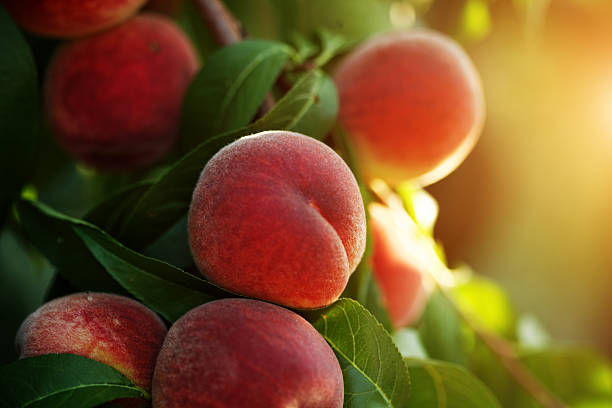
Short Lifespans
Unlike a majestic oak or a century-old apple tree, peach trees are inherently short-lived. In a standard backyard landscape, an uncared-for peach tree hit by pests, poor soil, and leaf curl will often completely decline within 5 to 7 years. Even under the meticulous, expert care of a master arborist, a peach tree’s maximum orchard lifespan is typically only 12 to 20 years. You are managing a sprinting asset, not a marathon runner.
The Frost Gamble
Even if your tree is structurally perfect and completely free of disease, Mother Nature holds all the cards. Peach trees flower exceptionally early in the spring. A sudden, single late-spring frost occurring right during or immediately after the blossom window will instantly kill the delicate, developing fruit tissue. It is a heartbreaking reality of northern fruit growing: some years, despite immaculate care, a sudden late freeze will wipe out your entire harvest yield down to exactly zero.
The Ultimate Secret: Start with Northern Hardiness
The single biggest mistake buyers make is walking into a big-box retail store and buying the cheapest peach sapling on the floor. The vast majority of mass-market fruit trees are propagated in mass commercial nurseries down south or out in California. They are genetically adapted to entirely different chill-hour profiles and soil structures.
When you purchase a tree, it is well worth the premium upfront cost to source Northern-hardy, Northern-grown varieties (such as Reliance, Contender, or Canadian Harmony) from localized, reputable regional nurseries. A tree that has already spent its youth hardening off against severe winters and heavy northern soils possesses an inherently superior immune system.
By pairing a genetically resilient variety with a rigorous cultural care plan, a calibrated soil profile, and precise late-dormancy treatments, you aren't just planting a tree—you are successfully securing a high-value, thriving asset for your property.


Comments