-01.avif)

The Brockway Mountain Red Ash: Why Details Matter in Tree Survival

Updated: 4 days ago
If you walk the muddy depressions of a Keweenaw Peninsula wetland, you expect to see Black Ash. It’s the default assumption for any field tech walking through an Upper Peninsula swamp. But if you stop, look closer, and actually run your thumb over the new growth, you might find something that the maps say shouldn't be there.
On a recent site visit near Mudd Lake, high up on the rugged conglomerate rock of Brockway Mountain, I found an outlier belonging to a critically endangered species: a Red Ash (Fraxinus pennsylvanica var. pennsylvanica).
As of this writing, this research-grade sapling is the only logged observation of a Red Ash in the entire Keweenaw area on iNaturalist.
The Anatomy of a Rare Red Ash Find
How do you know you're looking at a Red Ash when the rest of the world assumes it's a Black or Green Ash? It comes down to granular field mechanics.
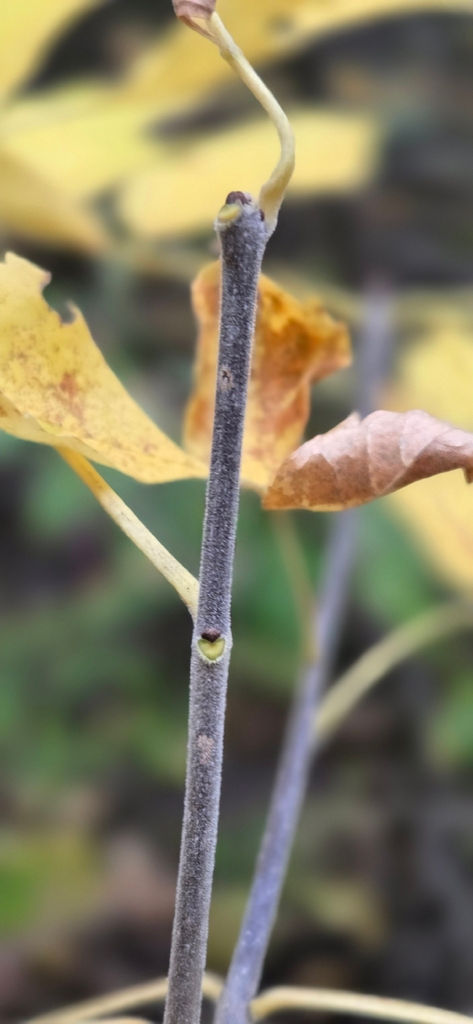
Most people know Green Ash, but Red Ash is its fuzzy, wetland-loving twin. The definitive proof is the pubescence—a distinct, fine layer of fuzz coating the dormant twigs. I documented this Brockway Mountain survivor with three specific field markers
:
The Pubescent Twig: The undeniable fuzz that separates it from the hairless Green Ash.
The Leaf Scar: The distinct notch left behind where the leaf detaches from the stem, which helps rule out White Ash.
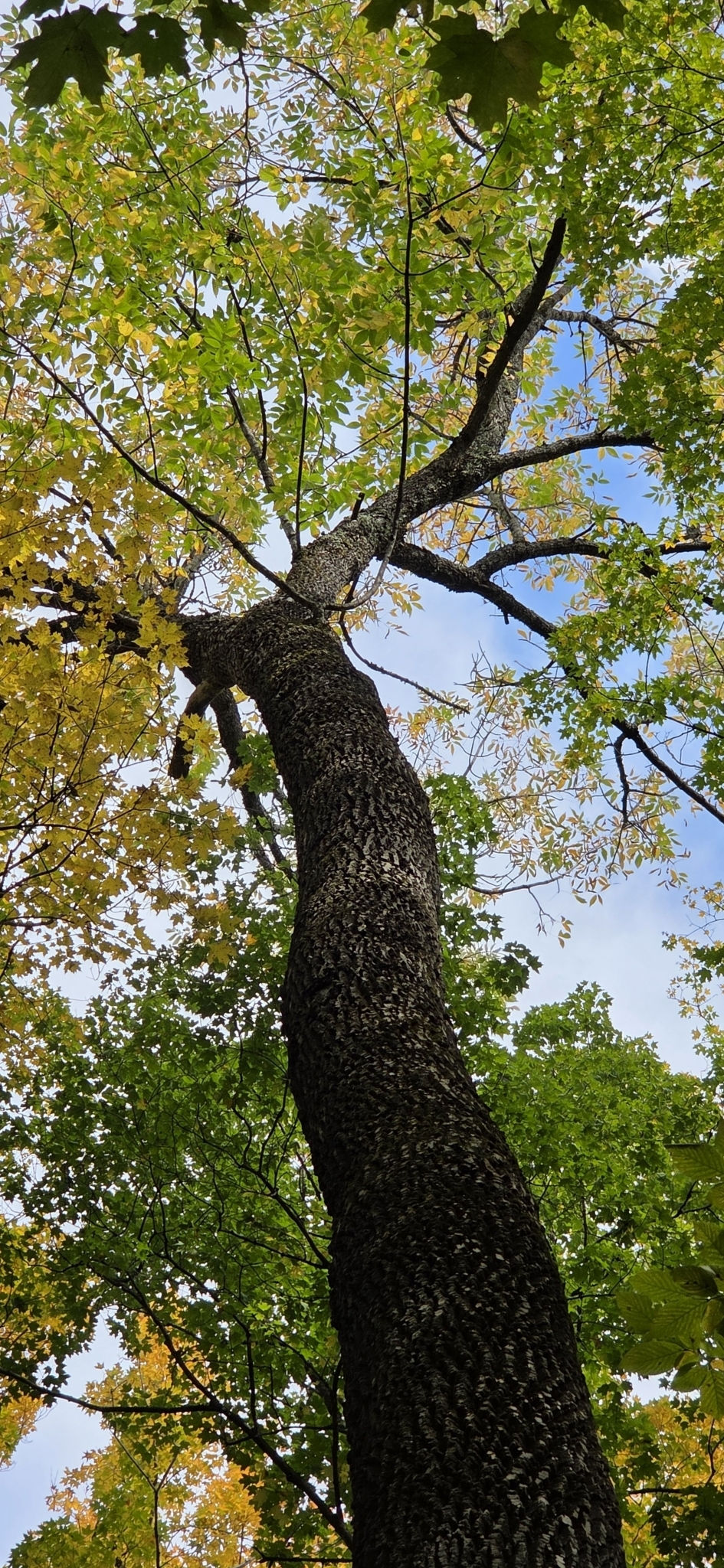
The Fall Canopy: Captured in its distinct, bright yellow autumn color.


From Commerce Township to the Keweenaw
Finding a Red Ash in Southeast Michigan isn’t shocking. Down around our Urban Arbor Care headquarters in Commerce Township, we see them thriving in the rich river bottoms and floodplains of the Huron River and Proud Lake. They like having their feet wet.
But finding one anchored into the thin soils of Brockway Mountain means this tree found a highly localized, perfect microclimate. The shallow depression of Mudd Lake acts as a northern analogue to those downstate floodplains, providing just enough water retention for this Red Ash to take hold in a completely unexpected geographic zone.
It’s proof that despite the devastation of the Emerald Ash Borer, these root systems are surviving. They are throwing up new saplings, adapting to harsh environments, and fighting back.
Why Clinical Observation Matters for Your Trees
This is why we don't just "guess" when it comes to tree care. The difference between an ecosystem thriving or failing comes down to correctly identifying what you are looking at. A misidentified tree leads to the wrong treatment protocol.
At Urban Arbor Care, we apply this exact level of clinical precision to your landscape. Whether we are diagnosing soil health in Oakland County or tracking rare ash regeneration in the Upper Peninsula, we build treatment plans based on ground-truthed data.
While these wild root suckers are fighting to survive in isolated UP pockets, your mature landscape trees can be fully protected right now. Through targeted trunk injections using emamectin benzoate and specialized soil drenches, we can shield your ash trees from EAB and preserve your property's canopy.
Need a clinical eye on your property?
Urban Arbor Care provides hands-on treatments throughout Metro Detroit and Oakland County, and we offer statewide Telehealth Consultations for remote diagnostics—from Southeast Michigan all the way up to the Keweenaw. Ready to get started? Click here to fill out our contact request form to schedule your consultation or reach out with questions.
Comments