-01.avif)

The Ash Tree Paradox: Drowning Bogs and Surviving Giants

The Emerald Ash Borer (EAB) has fundamentally rewritten the canopy of the Upper Peninsula. For over a decade, property owners and foresters have watched millions of Fraxinus trees succumb to this invasive pest. While our primary ash treatment routes run throughout Southeast Michigan, my recent boots-on-the-ground observations across the Keweenaw and the western U.P. reveal that the story of the ash tree isn't entirely over—it has simply split into two drastically different realities across the state.
As a diagnostician, I recently spent time surveying localized ash populations. What I found was a striking Ash Tree Paradox: the tragic, widespread collapse of Black Ash in our local bogs, contrasted against the astonishing survival of ancient White Ash giants just a few counties over.
Here is what is happening to our ash trees, and what it means for the future of our local forests.
The Tragedy of the Bogs: Estivant Pines and Black Ash Decline
In wetland areas like Estivant Pines, the situation is grim. Black Ash (Fraxinus nigra) are foundational species in these boggy ecosystems, acting as massive biological water pumps that draw moisture out of the soil through transpiration.
Unfortunately, these bogs are experiencing near-total canopy mortality.
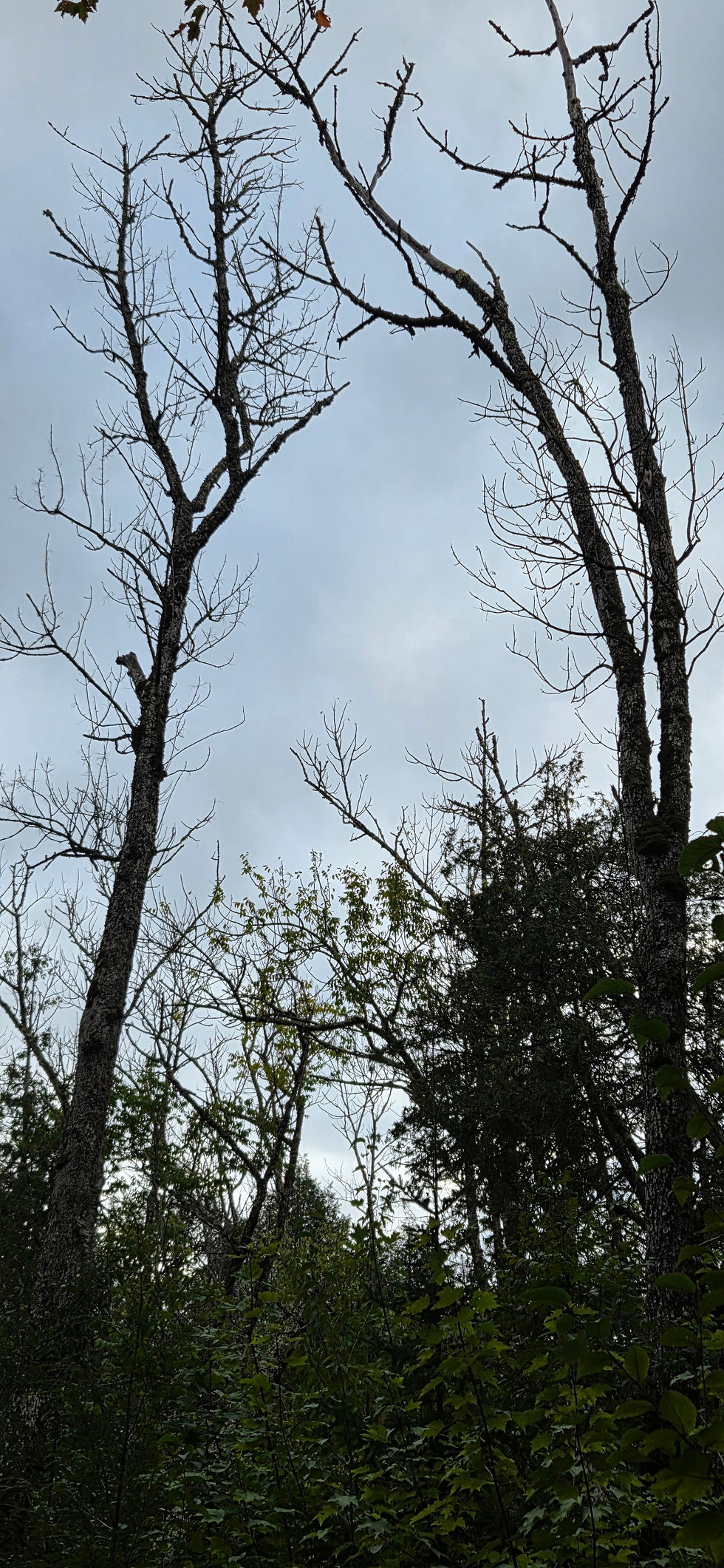
Walking through these areas, the horizon is dominated by the stark, skeletal remains of dead Black Ash canopies reaching into the sky.

A close look at the twigs and terminal buds confirms the identity of these struggling wetland ash species.
The lack of vigorous regeneration in these bogs isn't just about the borer; it is an ecological chain reaction. When EAB kills the mature Black Ash, the biological "pumps" shut down. The water table immediately rises, flooding the area. This "swamping effect" literally drowns the root systems of young saplings trying to take their place.
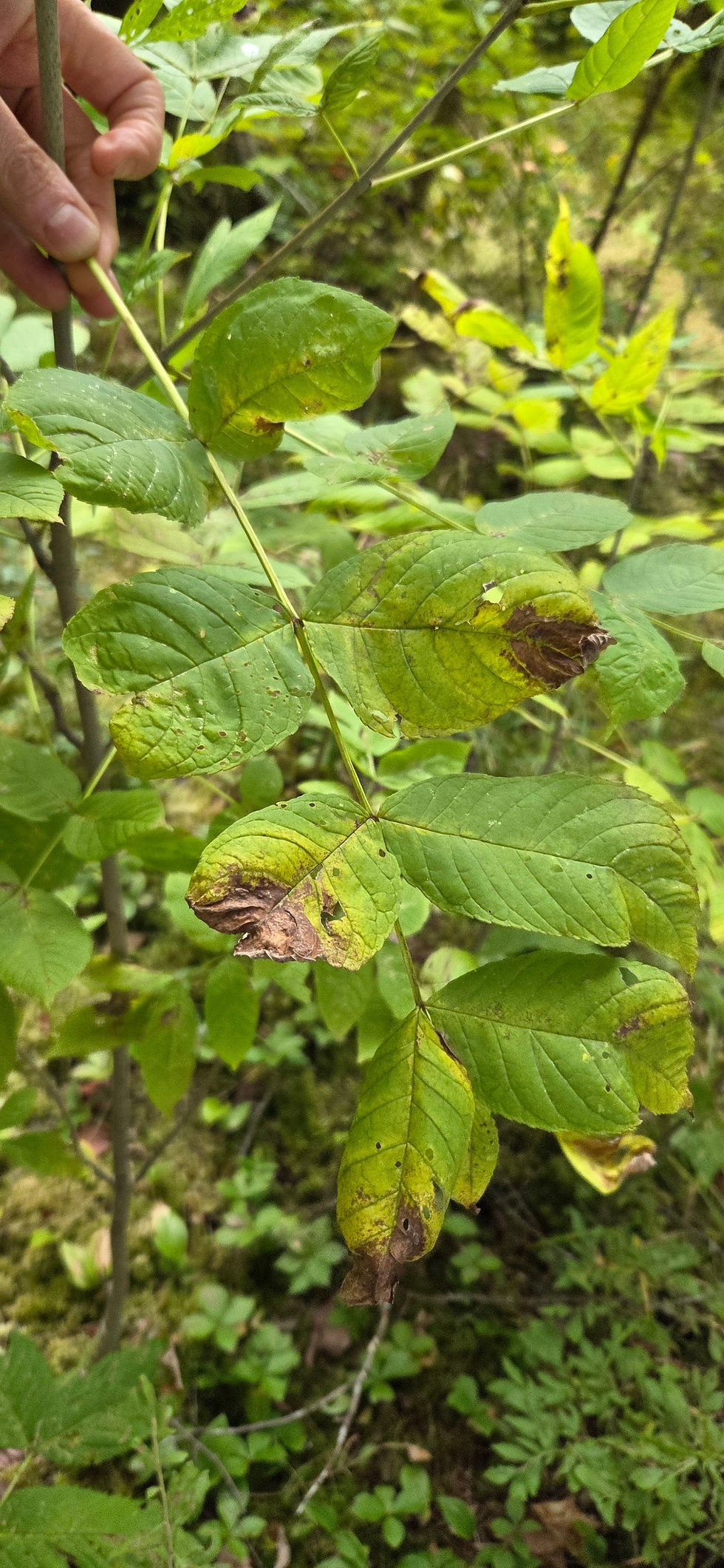
While I did find some sparse regeneration, these young black ash seedlings are barely hanging on—often exhibiting signs of secondary fungal diseases and severe environmental stress on their leaves, completely lacking the vigor of their upland counterparts.
The Ash Tree Paradox in Action: Old-Growth Giants of the Porcupine Mountains
While the bogs are drowning, a completely different story is unfolding on the high ridges of the Porcupine Mountains. During a recent field survey, I documented an ecological anomaly: a thriving stand of ancient, untouched White Ash (Fraxinus americana).

Standing among these giants feels like stepping into a parallel reality; the massive trunks feature the deep, robust, intersecting diamond patterns of old-growth bark entirely untouched by borer damage.

To ensure absolute scientific accuracy, I examined the twigs. The deeply notched, U-shaped leaf scars—resembling a smile wrapping around the lateral buds—irrefutably confirmed these as White Ash.
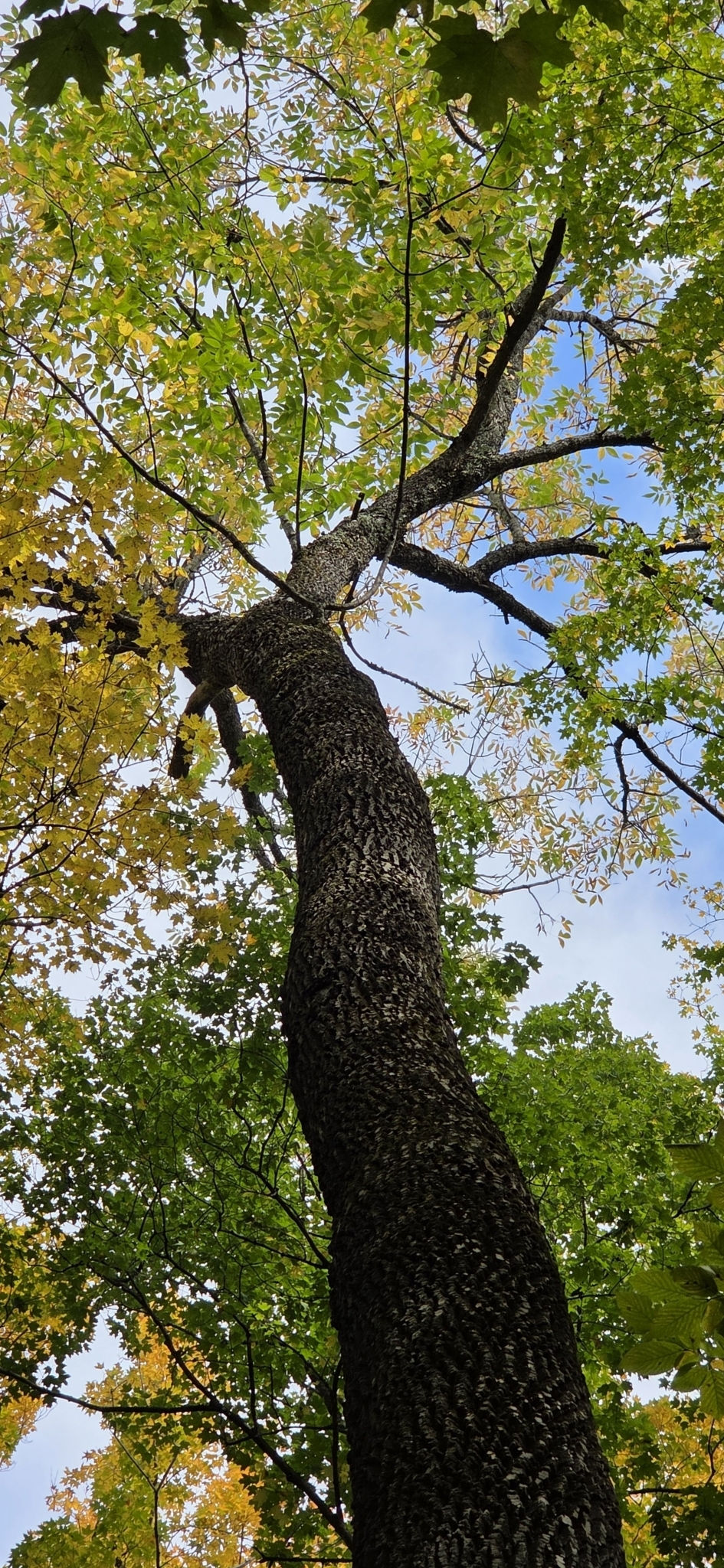
Looking up, the opposite branching structures supported full, vibrant canopies that have somehow evaded the EAB wave.
How are they surviving? While the state removes hundreds of infested trees just a few miles away at Lake Gogebic, these Porkies giants stand strong. Their survival is likely a combination of topographical armor and genetics. The deep ravines and severe winter microclimates off Lake Superior can create localized "deep freezes" that shatter overwintering EAB larvae. Furthermore, these specific trees may possess the rare "Lingering Ash" genetic resilience, allowing them to withstand the initial borer waves that wipe out surrounding populations.
The Edge of Hope for Michigan's Ash Trees
What does this mean for property owners across the state - from the Keweenaw down to Southeast Michigan? In many areas, the initial borer population is beginning to crash as its primary food source (mature, untreated ash) disappears. This is creating a critical window for ash seed banks to sprout and for surviving mature trees to be preserved.
Because White Ash prefers well-drained, upland soils, their saplings do not have to fight the deadly "swamping effect" that kills wetland Black Ash. Whether it is a natural stand in the U.P. or a prized landscape tree in Oakland County, White Ash has a much stronger chance of anchoring a resilient canopy over the next decade, especially when supported by proactive diagnostics and targeted treatments.
Protect Your Canopy with Urban Arbor Care
Understanding the exact species and health status of your trees is the first step in saving them. Urban Arbor Care provides comprehensive, high-level diagnostics and treatment plans for property owners across the state—from our primary service routes in Southeast Michigan up to the Keweenaw Peninsula. Our services include:
Expert Identification: Confirming exact tree species to ensure the correct treatment protocols.
Health & Risk Assessments: Thorough evaluations to diagnose pest activity, fungal disease, and structural integrity.
Systemic Micro-Injections: Utilizing advanced Arborjet technology (like TREE-äge) for mature, high-value trees to provide multi-year protection against EAB.
Soil Drenches: Applying targeted imidacloprid treatments for smaller trees and saplings.
If you have ash trees on your property and want to know where they stand, reach out via our contact page to schedule a consultation and secure your canopy.
Dawn Hughes is the CEO and Lead Diagnostician of Urban Arbor Care LLC, specializing in high-level tree diagnostics, ecological restoration, and preservation in Southeast Michigan and the Keweenaw Peninsula.


Comments