-01.avif)

Lit on Fire: Sudden Death and Summer Wilt in Metro Detroit’s Mature Trees

If you’ve driven anywhere through Metro Detroit in late July, you may have noticed a startling trend in the canopy: full, mature trees that looked healthy a month ago now appear as if they were lit on fire. Leaves turn scorched brown, bronze, or yellow overnight, clinging to flagging branches or dropping in massive quantities while still half-green.
This dramatic mid-summer browning is usually not simple drought stress; it is often the first sign of a lethal summer wilt—a category of lethal fungal infections that hijack a tree’s internal plumbing right when the summer heat hits its peak.

The Mid-Summer "Scorching" Phenomenon
During the high heat and dry spells of late summer, mature trees pump immense volumes of water up through their vascular system (xylem). When a fungal wilt pathogen enters that system, it rapidly multiplies. In response, the tree attempts to wall off the invader by plugging its own water-conducting vessels.
The result is swift, devastating desiccation. The canopy starves for water, leading to that characteristic "scorched" or "fired up" appearance almost overnight. Because vascular diseases rapidly dehydrate tree tissue, trees killed by wilt become brittle and structurally compromised far quicker than trees dying from gradual decline, making early evaluation essential before a dead specimen becomes an immediate property hazard.
The Usual Suspects in Southeast Michigan
While these diseases present with strikingly similar canopy symptoms, their vectors and attack strategies vary across species:
Oak Wilt (Breziella fagacearum): Primarily devastating to the Red Oak group (Pin, Red, Black). Transmitted above-ground by nitidulid sap beetles attracted to fresh wounds, and below-ground through interconnected root systems.

Classic leaf margin scorching on a Red Oak—leaves brown from the outer tips inward while staying green near the stem. Paul A. Mistretta, USDA Forest Service, Bugwood.org
Dutch Elm Disease (Ophiostoma spp.): A classic vascular killer spread by native and European elm bark beetles, causing rapid branch flagging and crown death in mature American Elms.
Pine Decline / Wilt: A complex interaction involving bark beetles, pine wood nematodes, and extreme environmental stress, causing highly vulnerable species—most notably Scots, Austrian, and stressed native pines—to turn completely brown in a short window.
Verticillium Wilt (Verticillium spp.): A soil-borne fungal pathogen that affects Maples, Ashes, and other hardwoods. It can present as a slow multi-year dieback or a sudden, shocking summer flare-up.
The Critical Truth: Why Prevention Is the Only Cure
Here is the hard reality of vascular wilt diseases: Once visual symptoms appear throughout the canopy, it is almost always far too late to save that specific tree.
Because the fungus rapidly destroys the tree's internal water transport network, chemical treatments cannot effectively circulate through tissue that is already blocked or dead.
Prophylactic Protection
Protecting high-value, mature trees requires a prophylactic (preventive) strategy. High-risk trees—such as healthy Red Oaks adjacent to a known Oak Wilt pocket, or specimen Elms in historic neighborhoods—must be identified and treated before infection strikes.
Macro-Injections: Effective protection often relies on targeted trunk micro-injections or macro-infusions of specialized systemic fungicides.
Licensed Specialists: Systemic tree injections must be calculated and applied by a Certified Pesticide Applicator with specific training in arboricultural vascular therapy to ensure the compound reaches the upper canopy without causing irreparable trunk damage.
High-Stakes Removals, Root Grafts, and Firewood Handling
When a tree succumbs to a wilt disease, immediate care must be taken regarding how and when it is removed. A panic-driven removal can actively spread the disease to neighboring healthy trees across property lines.
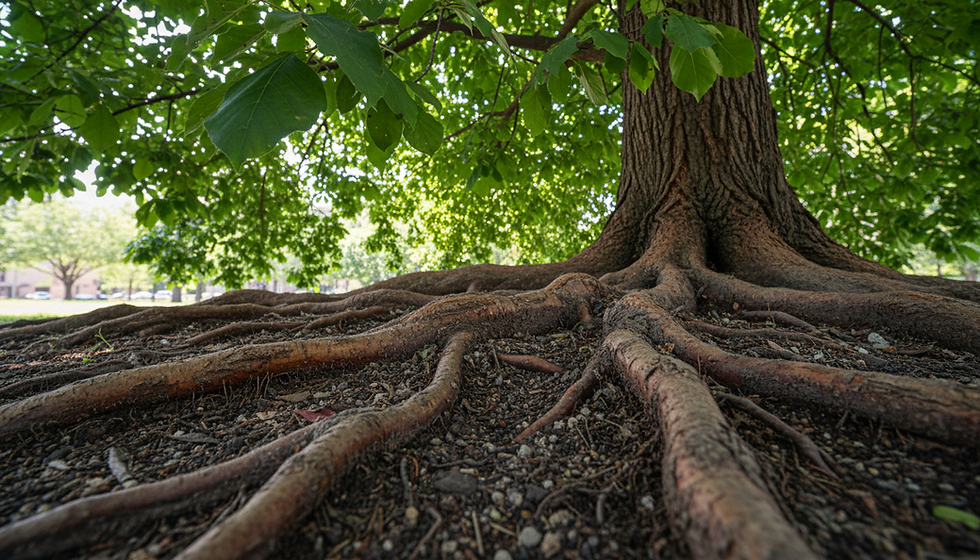
Removing or pruning a wilt-infected Oak during the active vector window (April through July/August) releases volatile stress scents that attract sap beetles from miles away. Furthermore, beneath the soil, mature trees of the same species routinely form interconnected root grafts across property boundaries. If a sick tree is severed while its roots are grafted to nearby healthy trees, the sudden change in vascular tension can actually hasten the pull of active fungal cells and hyphae through the interconnected root pathways directly into adjacent trees. In these cases, severing root connections with specialized trenching equipment prior to removal is necessary to protect surrounding timber.

Likewise, timber management after removal requires strict protocol. Wood cut from trees infected with Oak Wilt or Dutch Elm Disease can still harbor active fungal mats and insect larvae. Moving this firewood off-site or storing unseasoned wood near healthy timber can transport beetle populations and fungal spores into uninfected pockets. Infected wood must be processed, debarked, chipped, or burned locally to prevent introducing pathogens to new areas.
Is Your Canopy at Risk for Summer Wilt?
I’ve spent seasons watching Oak Wilt move through patches of Wise Woods in Commerce Township, tracking its progress and learning to respect just how fast and relentless it is. There’s a quiet heartbreak in watching a massive, centuries-old tree succumb—and when that tree is sitting in your backyard, that heartbreak quickly turns into a midnight worry about safety, liability, and the sheer cost of taking it down.
Whether you are looking to safeguard a cherished specimen tree or need a professional evaluation of a rapidly browning canopy, expert diagnosis is your first line of defense.
Contact our diagnostic team to schedule a comprehensive landscape evaluation. We will identify high-risk species, develop a preventive protection plan, or safely manage diseased removals to protect the long-term health and value of your property.
Dawn Hughes is the principal diagnostician and majority partner at Urban Arbor Care. As a commercially licensed and fully insured applicator, she specializes in advanced vascular therapies and high-stakes canopy preservation. Currently finalizing her credentials as a Certified Ecological Restoration Practitioner (CERP), Dawn leads the firm's strategic transition from traditional tree care to comprehensive ecological management across Michigan.

Comments